PMBOK
The PMBOK® Guide (A Guide to the Project Management Body of Knowledge) is published by the Project Management Institute (PMI) and is one of the best-known references in project management. It brings together recognised concepts, principles, practices and guidance that help project management professionals plan and deliver projects across different industries.
PMI first published the PMBOK standard in 1987, followed by the first edition of the guide in 1996. Since then, the guide has evolved to reflect changes in project management practices and the growing diversity of project environments.
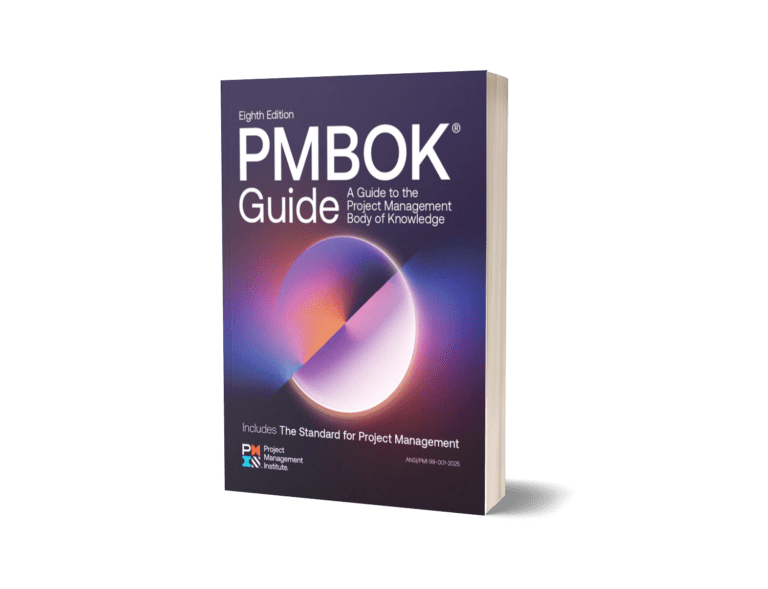
The PMBOK Guide – Eighth Edition was released on 13 November 2025. It builds on previous editions while continuing to develop PMI’s guidance for today’s project professionals. You can explore the main changes in our article on the PMBOK Guide Eighth Edition: What You Need to Know.
The sixth and seventh editions remain important for understanding the evolution of the guide. The sixth edition focuses on processes, knowledge areas and process groups, while the seventh edition introduced a principle-based approach centred on performance domains and value delivery.




The Evolution of the PMBOK Guide
Project management knowledge evolves as new practices, methods and tools emerge. Professional organisations such as PMI help capture and share this knowledge through standards and guidance that support practitioners across industries.
The PMBOK Guide has changed significantly over the years. Earlier editions provided a structured, process-based approach to project management, while later editions placed greater emphasis on principles, adaptability and delivering value.
Understanding these changes is useful for project managers preparing for professional certifications, applying project management practices or choosing an approach suited to their projects.
The PMBOK Guide as a Guide to Best Practices
The PMBOK Guide organises project management knowledge and provides guidance that professionals can adapt to different project contexts. It is not intended to prescribe a single method that must be followed identically on every project.
Instead, it offers concepts, practices and guidance that help project managers make informed decisions based on the project’s objectives, constraints, stakeholders and environment.
The idea of generally recognised practices reflects knowledge and approaches that are considered useful across many projects. Their suitability, however, depends on the specific circumstances. Project managers need to exercise professional judgement and tailor their approach rather than apply every practice automatically.
Learn more about tailoring in project management and how to adapt your approach to project requirements.
PMBOK Guide – Sixth Edition: A Process-Based Approach
Published in 2017, the PMBOK Guide – Sixth Edition uses a process-based approach to describe project management. It organises project management work into processes, process groups and knowledge areas, providing a structured way to understand how project activities relate to one another.
This edition identifies 49 project management processes, organised into five process groups and ten knowledge areas.
The five process groups are:
Initiating
Planning
Executing
Monitoring and Controlling
Closing
The ten knowledge areas cover key aspects of project management, including integration, scope, schedule, cost, quality, resources, communications, risk, procurement and stakeholder management.
Each process is described through elements such as:
Inputs: Information, documents and other elements needed to carry out the process.
Tools and techniques: Methods used to perform the work and transform inputs into results.
Outputs: The results produced by the process, such as plans, documents, decisions or deliverables.
Processes may interact with one another throughout the project lifecycle. Their application depends on the project and the approach being used.
The sixth edition is particularly useful for understanding traditional process-based project management and remains relevant when studying the development of PMI’s framework. It also provides useful context for professionals familiar with earlier editions.
PMBOK Guide – Seventh Edition: A Shift Towards Principles and Value
PMI released the PMBOK Guide – Seventh Edition in August 2021. This edition represented a significant change from the process-oriented structure of earlier versions.
Rather than organising its main framework around process groups and knowledge areas, the seventh edition focuses on principles and performance domains. This shift reflects the need to support projects in a wide variety of environments, including Agile approaches, hybrid approaches and traditional project management.
Key Changes in the PMBOK Guide – Seventh Edition
1. A principle-based approach
The seventh edition introduces 12 project management principles that guide professional behaviour and decision-making. These principles provide a foundation for managing projects across different contexts rather than prescribing a fixed set of processes for every situation.
2. Eight project performance domains
The guide introduces eight performance domains: stakeholders, team, development approach and life cycle, planning, project work, delivery, measurement, and uncertainty.
These interconnected areas describe the activities and considerations that contribute to effective project performance.
3. Greater emphasis on value delivery
The seventh edition places greater emphasis on outcomes and value, rather than focusing solely on the production of deliverables. Project success involves considering whether the work achieves its intended objectives and creates value for stakeholders and the organisation.
4. Tailoring and adaptability
The guide emphasises the importance of tailoring project management practices to the project’s specific needs. Project managers should consider factors such as complexity, uncertainty, delivery approach and organisational requirements when deciding how to manage their projects.
Learn more about tailoring and adaptation in project management.
5. Support for different delivery approaches
The seventh edition is designed to support predictive, Agile and hybrid approaches. This flexibility recognises that projects differ in their requirements and that a single delivery approach may not be suitable for every situation.
6. Digital content and evolving guidance
PMI also provides digital project management resources to complement the guide and support professionals as practices and knowledge continue to evolve.
The seventh edition therefore represents a move towards a more adaptable, principle-based view of project management, while retaining the importance of professional judgement and effective delivery.
PMBOK Guide – Eighth Edition
Released on 13 November 2025, the PMBOK Guide – Eighth Edition is the latest edition of PMI’s guide. It continues the evolution of the PMBOK framework, bringing together established project management practices and guidance suited to contemporary project environments.
The eighth edition builds on the developments introduced in the seventh edition while giving renewed attention to practical project management guidance. It reflects PMI’s continuing effort to make the guide relevant to professionals working across different industries, project types and delivery approaches.
For a more detailed overview of the changes and what they mean for project management professionals, read our article: PMBOK Guide Eighth Edition: What You Need to Know.
Which PMBOK Guide Edition Should You Use?
The most appropriate edition depends on your purpose, your professional context and the requirements of your certification or organisation.
PMBOK Guide – Sixth Edition: Useful for understanding process groups, knowledge areas and the 49 project management processes.
PMBOK Guide – Seventh Edition: Useful for understanding project management principles, performance domains, tailoring and value delivery.
PMBOK Guide – Eighth Edition: The latest edition, providing updated guidance for contemporary project management practice.
The editions illustrate how project management has evolved from a more process-oriented framework towards an approach that combines structured practices with principles, adaptability and a focus on value.
Project managers should always check the specific reference materials and exam requirements that apply to their certification, as the relevant guidance may differ depending on the exam and its effective date.
Project Management Courses
Develop your project management knowledge and prepare for professional certification with XPM Consulting.
Explore the XPM Consulting training calendar for upcoming courses and events.
Further Project Management Resources
Explore additional resources to support your professional development:
Project Management Quiz – Test your project management knowledge.
Project Management Templates – Access practical templates for project work.
Project Management eBook – Explore additional project management guidance.
XPM Consulting YouTube channel – Watch videos on project management and Agile.
Conclusion
The PMBOK Guide has evolved alongside the project management profession. The sixth edition provides a detailed process-based structure, the seventh edition shifts the emphasis towards principles and performance domains, and the eighth edition continues to develop PMI’s guidance for today’s project environments.
Understanding these differences helps project managers choose appropriate practices, adapt their approach to project requirements and focus on delivering value.
Project management knowledge is continually evolving. Staying informed about changes to recognised standards and guidance helps professionals maintain their knowledge and apply relevant practices in their work.
Frequently Asked Questions About the PMBOK Guide
What is the PMBOK Guide?
The PMBOK® Guide (Project Management Body of Knowledge) is a publication by the Project Management Institute (PMI) that provides guidance on project management principles, practices, and approaches. It helps project professionals understand and apply project management concepts across different types of projects.
What is the difference between the PMBOK Guide 7th and 8th editions?
The PMBOK® Guide – Seventh Edition focuses on 12 project management principles and eight performance domains. The Eighth Edition retains this principles- and performance-based foundation but makes the guidance more practical and actionable. It introduces six core principles, seven performance domains, and reintroduces process guidance in a non-prescriptive format. It also expands coverage of artificial intelligence (AI), project management offices (PMOs), and procurement. The result is a more integrated approach that connects project management principles with practical ways of working.
What is the latest edition of the PMBOK Guide?
The PMBOK® Guide – Eighth Edition was released on 13 November 2025. For an overview of its main changes, read our article on the PMBOK Guide Eighth Edition.
Is the PMBOK Guide required for the PMP certification?
The PMBOK Guide is an important project management reference, but reading it alone does not fulfil all the requirements for PMP certification. Candidates should prepare according to the current PMP Exam Content Outline and use appropriate study resources.
Which PMBOK Guide edition should I study for the PMP exam?
Choose your study materials based on the current PMP Exam Content Outline and the exam version you intend to take. The PMBOK Guide is one useful reference, but candidates should also practise applying project management concepts to realistic scenarios and use up-to-date exam preparation materials.